By Michael Logan
Checking out a Ukrainian book is a simple, concrete way to show that Ukrainian voices, history, and culture matter to your community. This guide explains how a small action at your local library can help keep Ukrainian narratives on the shelves and make space for more of them.
Libraries choose their shelving priorities based on metrics including the number of times a book is taken out. It is an unspoken for show of support for a work to be taken off of the shelf. Your librarian will take note of which books draw eyes, keep those books on the shelf and even stock more like it. Send the signal that Ukrainian narratives, history and people are valuable by doing so little as taking a book off the shelf.
1. Easiest method: Check out Ukrainian-authored / recommended books
Libraries ‘weed out’ books that don’t get checked out enough. Just interacting with a book in the library is a strong signal that the book is valuable to library users.
All you need to do is check out a book! We’ve got recommendation lists below.
Here’s what to do:
- Find books from Ukrainian authors in your library catalog. (Examples below)
- Check out some of the books.
That’s it! (Apart from returning them on time, of course.)
Don’t be shy to place a hold on a book, or to request an inter-library loan. That’s a great way to show that people want to read it!
2. Advanced: Request that your library add a book
You can go a step further and actively request that your library stock a specific book.
- Ask the help desk for a way to contact the librarian in charge of stocking the children’s language section. You may be able to ask them to leave a message then and there. You will often be given an email.
- Write them an email asking them to add one or more specific books to their collection. Make it easy for them by including a link to the book’s online page on (for example) Amazon or Goodreads.
Some tips:
- It is important to remember that every library system is unique, and your library might be structured differently from other libraries.
- It’s always helpful to make a meaningful connection with the staff member in charge of managing the collection.


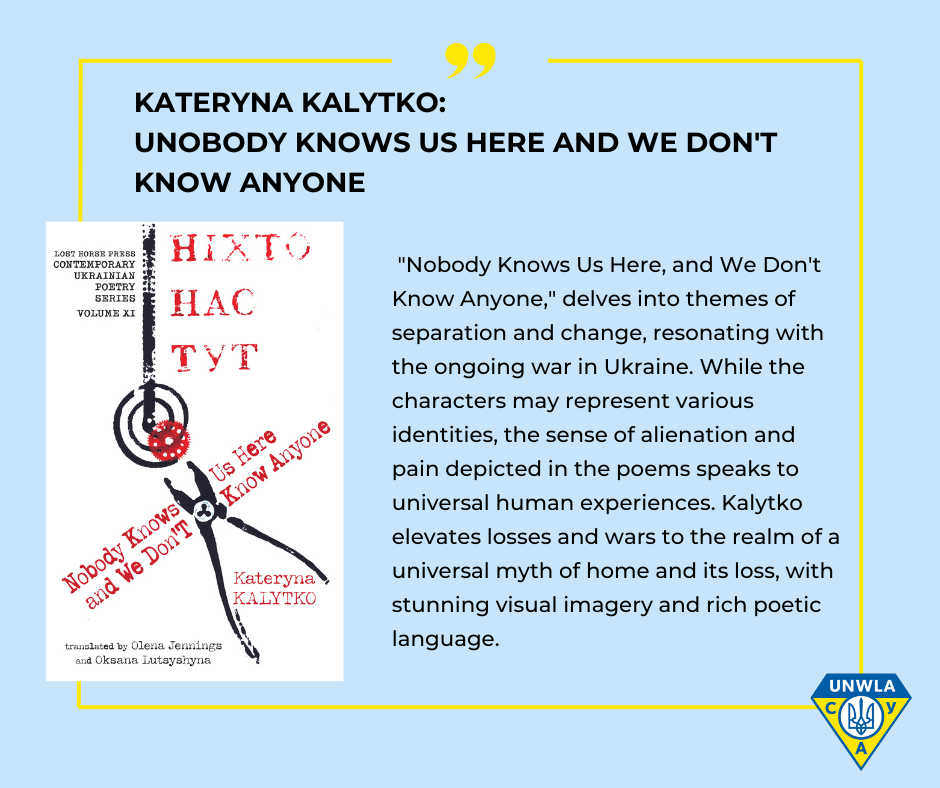

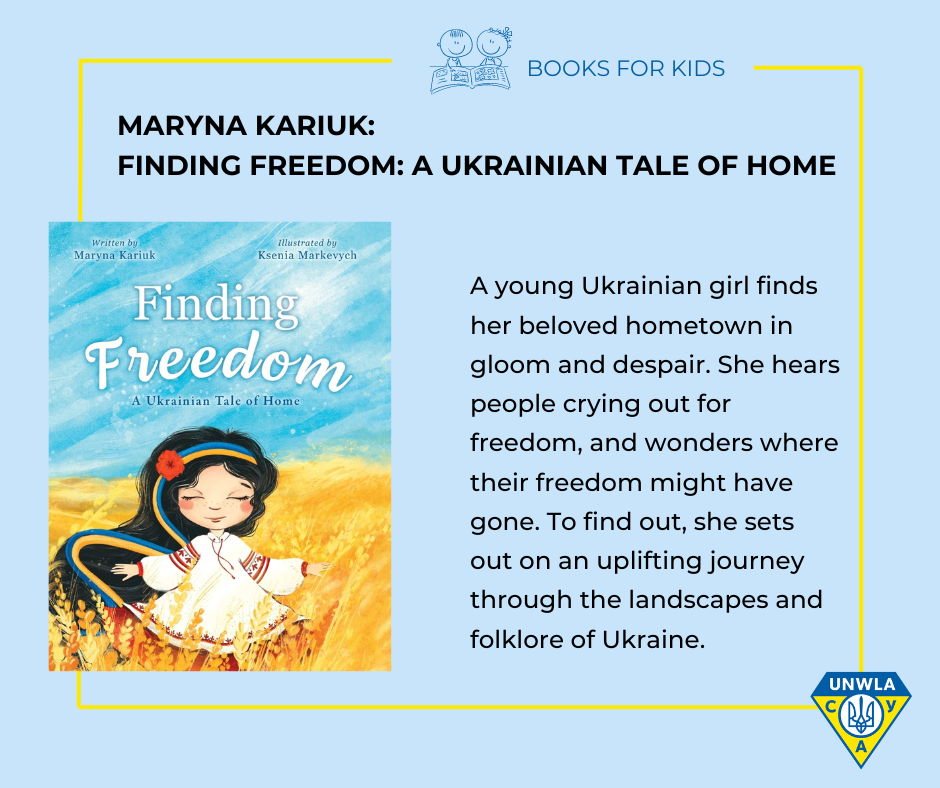
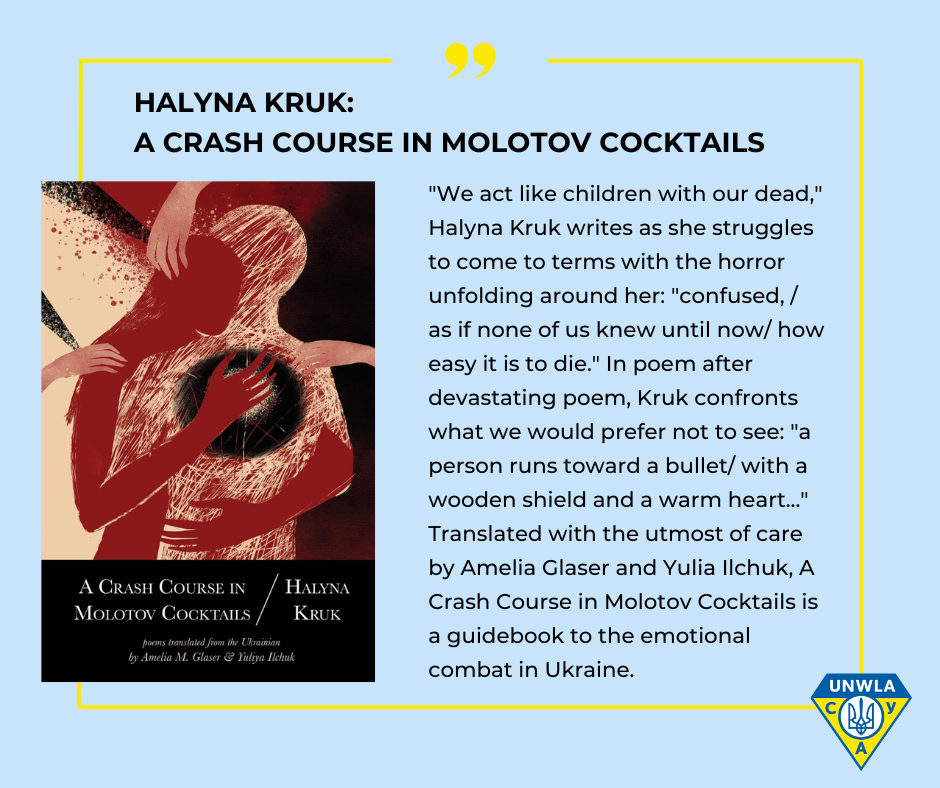
Some recommended books
Children’s books
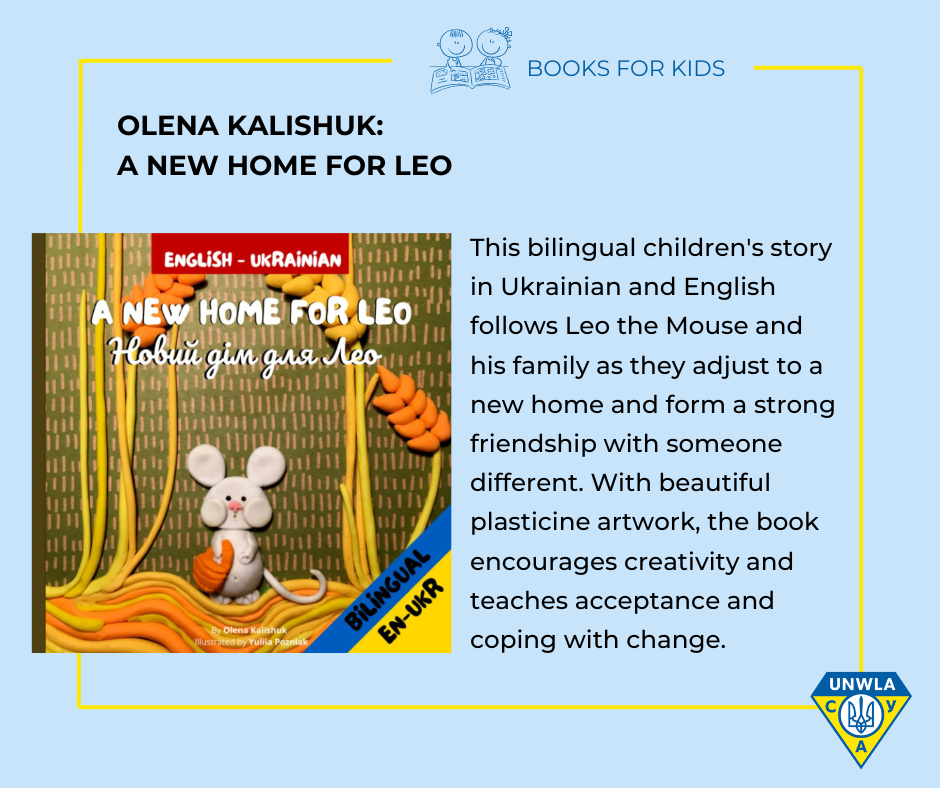
- A New Home for Leo – by Olena Kalishuk (Author), Yuliia Pozniak (Illustrator) (Amazon, Goodreads)
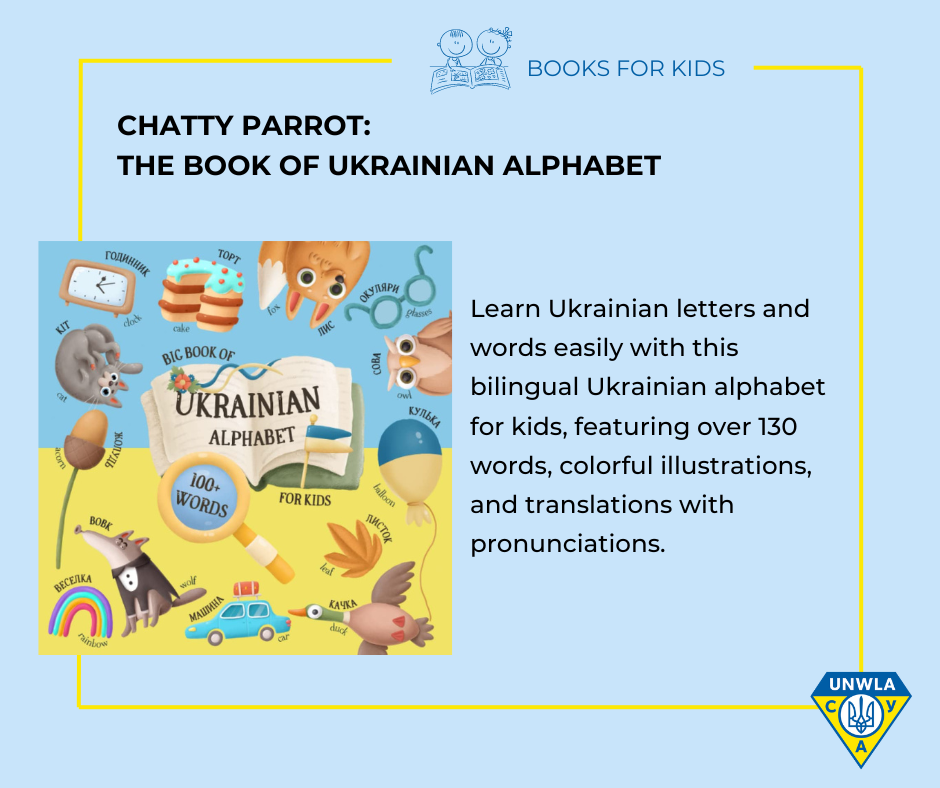
- Big Book of Ukrainian Alphabet for Kids: English-Ukrainian Book for Kids – 130+ Ukrainian Words with Illustrations, Translation, and Pronunciation – by Chatty Parrot (Amazon, Goodreads)
- Who Lives in the Wood – by Chatty Parrot (Amazon, Goodreads)
- Finding Freedom: A Ukrainian Tale of Home – by Maryna Kariuk (Author), Ksenia Markevych (Illustrator) (Amazon, Goodreads)
History
Cookbooks
- Baba’s Kitchen Ukrainian Soul Food with Stories from the Village, by Raisa Stone (Amazon, Goodreads)
- Summer Kitchens Recipes and Reminiscences from Every Corner of Ukraine, by Olia Hercules (Amazon, Goodreads)
- A Ukrainian Christmas, by Yaroslav Hrytsak (Amazon, Goodreads)
- BUDMO!: Recipes from a Ukrainian Kitchen, by Anna Voloshyna (Amazon, Goodreads)
Lists of recommended books
- UNWLA book list – Google Sheets
- UNWLA page with featured recommended books
- Chapter Ukraine – curated reading list (via UNWLA toolkit)
From the Ukrainian Women’s League of America (UNWLA)’s presentation about their library project:
Why this project?
To help more people learn about and appreciate Ukrainian literature, culture, and heritage by adding books in both English and Ukrainian to public libraries across the United States.
Why it matters:
Sharing books with Ukrainian voices, culture, and experiences helps preserve Ukrainian identity, celebrate its rich heritage, and bring it to more people – especially important during times of war and misinformation.
Most Americans have little knowledge of Russia’s long history of Ukrainian language suppression. Nor do they grasp the current destruction of Ukrainian-language libraries in occupied territories.
– UNWLA Library Toolkit (pdf)
Sharing Ukraine’s history and its history of language suppression will go a long way to explaining why Ukrainian readers shouldn’t be made to settle for Russian.
As it stands, Russia takes the lion’s share of Eastern European representation in our literature and collective imagination. This is an intentional result of over a century of occupation and brutal suppression of the region, combined with a massive propaganda campaign.
These actions represent a small but significant way that you can help push the needle in the other direction.
