By Yulia Brockdorf
For generations, military medicine has rested on a simple rule: a wounded soldier who reaches surgical care within an hour of injury will very likely survive. On Ukraine’s front line, that hour has all but vanished.
Drones explain most of the change. They now cause the large majority of casualties in the war, and they wound and watch at the same time. Medics and evacuation vehicles are routine targets, and helicopters, the backbone of American casualty evacuation for decades, can rarely fly in skies this crowded with drones.
Wounded soldiers now wait hours, sometimes days, to be moved. This spring, a Ukrainian medic told an audience of American Army medics at Fort Bragg about a soldier who waited 12 days before he could be brought to a forward field unit.
When the wounded cannot reach the hospital quickly, care has to move closer to them and last longer. Military planners call this prolonged casualty care, and Ukraine now practices it every day.

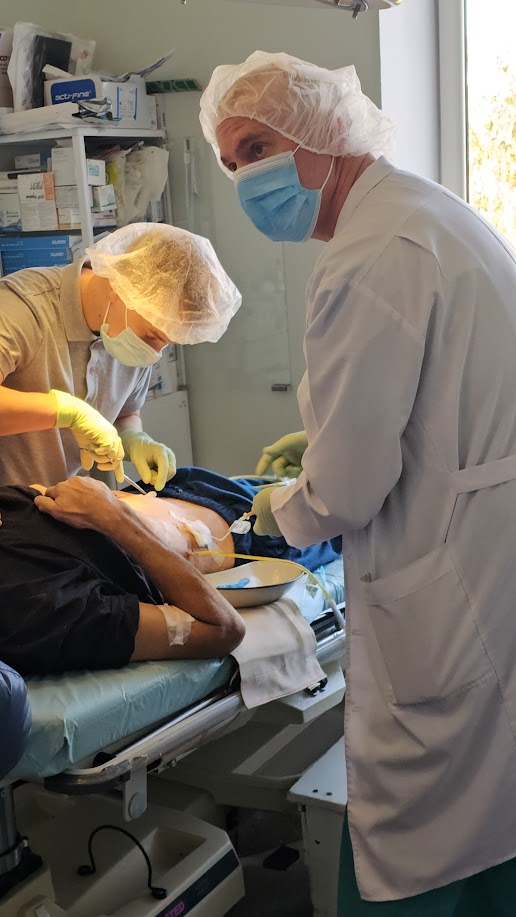
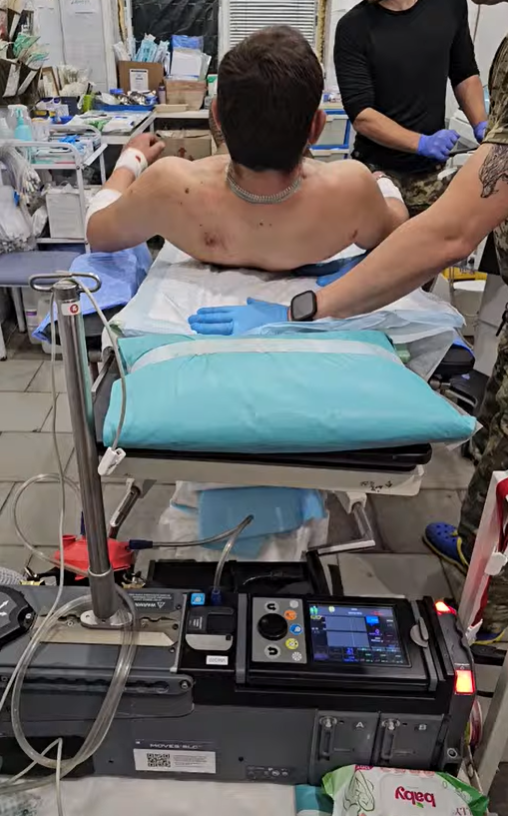
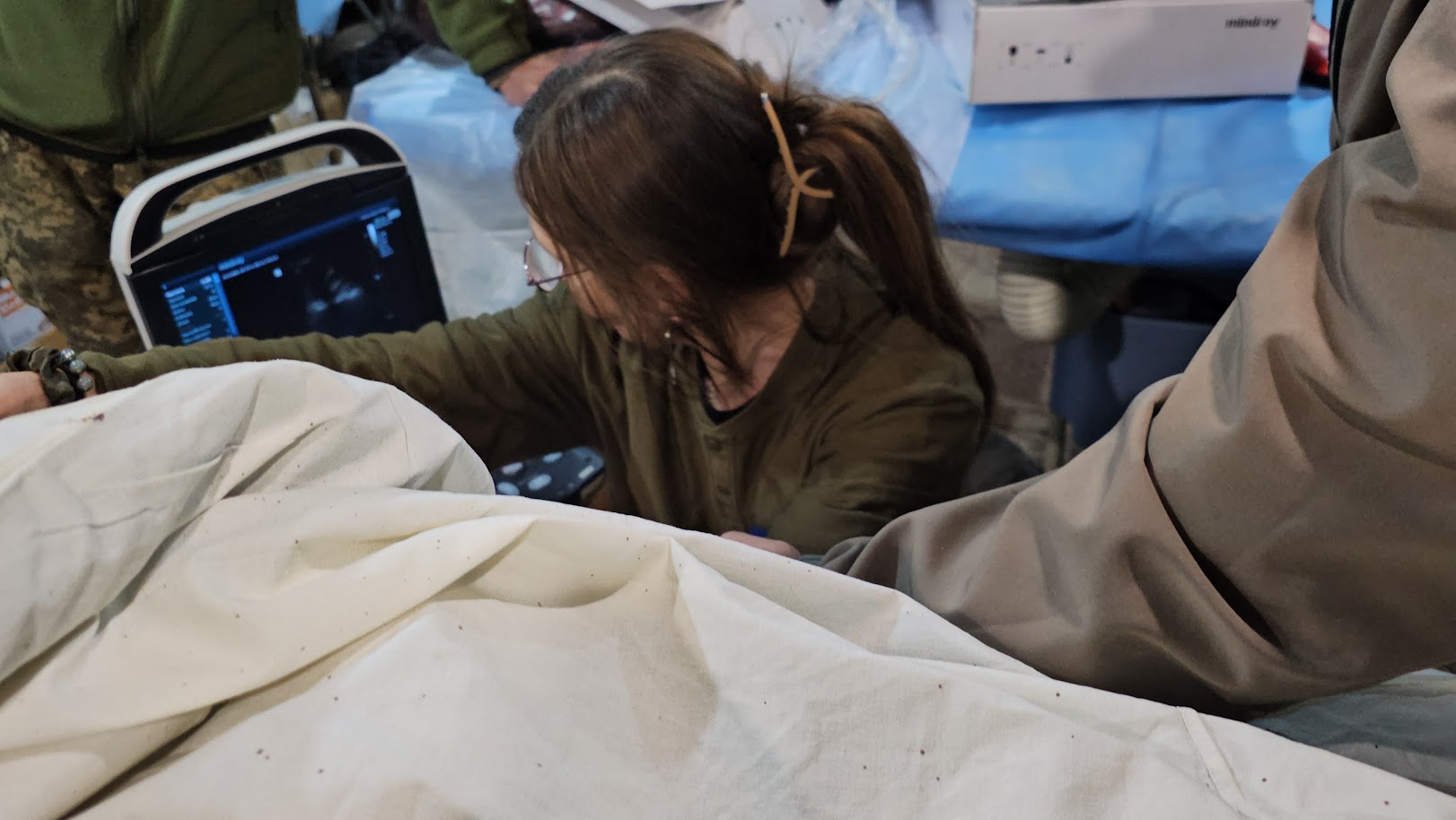
Surgeons, anesthesiologists, and nurses work in improvised facilities within the enemy’s reach, performing procedures that doctrine once assigned to hospitals far behind the line.
Every hour of delay makes injuries harder to treat. Blast wounds carry soil and debris deep into the body, and Ukrainian health officials warn that long evacuations and late cleaning of wounds are fueling infections that resist antibiotics. Surgeons abroad who treat Ukrainian soldiers report that some patients reach definitive care with wounds that are months old.
All of this happens with scarce resources. Front-line teams rely on a supply chain that runs from Ukraine’s health system to donors and volunteers abroad, and their requests are exact, down to the type of suture needle a surgical team needs.
Video: Yulia Brockdorf
Ukraine has also found new ways to reach the wounded: robotic ground vehicles that carry soldiers out of positions no crew could safely reach, drones that fly medical supplies to the trenches, and trains converted into mobile triage centers.
Western militaries are watching closely. Senior American military medical officials have praised how Ukraine has reshaped its trauma care to keep soldiers alive on an exceptionally lethal battlefield. American planners see in Ukraine a preview of what their forces could face against a major adversary, where evacuating the wounded would be just as hard. The lessons they now study were written by Ukrainian doctors working with a fraction of what a Western army would consider the minimum.